Dear donors and friends,
In early August, Y Tam made a field survey trip to Yang Mao commune, Krông Bông district, Đăk Lăk province. The commune has 3 hamlets (Kinh people) and 8 villages (ethnic minority villagers), and 70% of its households belong to the M'Nông and Ê Đê ethnic minority communities. Y Tam visited every hamlet and village to learn about the daily lives of the people here, and below is the information we gathered from the survey:
I/ SURVEY RESULTS
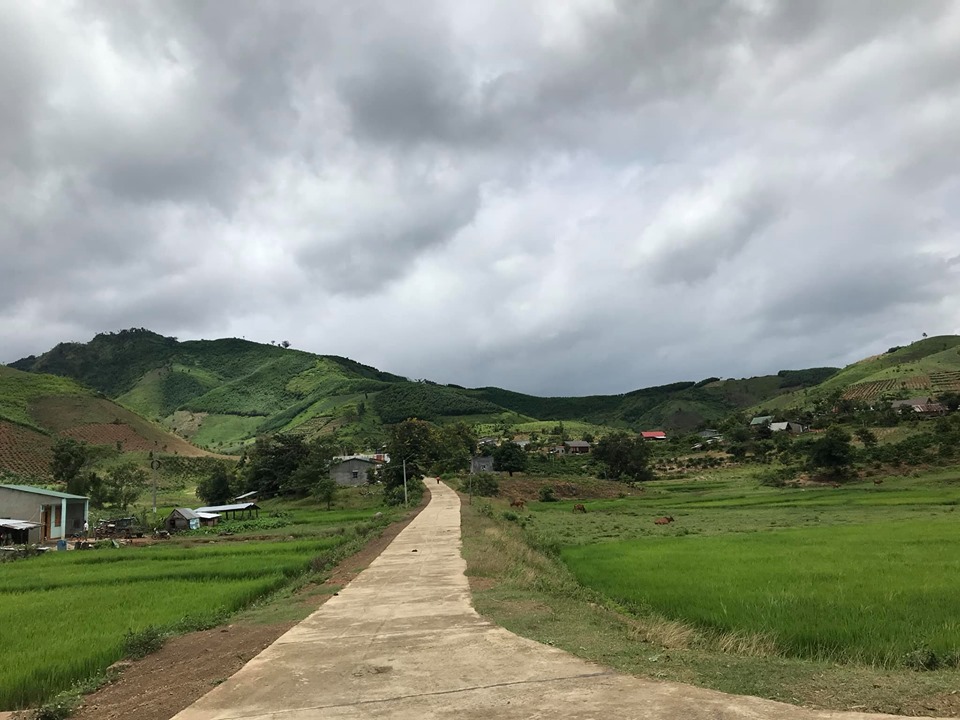
The road into Tar village, Yang Mao commune
Yang Mao is a Zone 3 commune (an area of extreme hardship). Although the government has supported it with a great deal of infrastructure and poverty reduction policies (schools, a health station, roads…), people's lives are still very hard, with problems such as housing, clean water, toilets…
Clean water is perhaps the most pressing issue in Yang Mao. Of the 3 hamlets and 8 villages, only 1 village has clean water (water piped in from a stream through a filter tank); the other hamlets and villages have none at all. People have to carry stream water home and use it as it is, for drinking, cooking and all their daily needs.
However, the reality is that the stream water is now polluted with pesticides, chemical fertilizers… and is not at all safe for people's health, especially for children.
When asked about drilling wells for groundwater, the villagers said that drilling here rarely finds water and costs a great deal. With their difficult economic situation, they cannot drill wells themselves. So even though they know the stream water is polluted and harms their health, they still have to use it.
II/ PROJECT MODEL
Based on the survey results above, Y Tam met with the local leaders of Yang Mao commune to discuss ways to solve the villagers' clean water problem. Y Tam proposed choosing one village, Tar village, home to 52 households, to pilot the clean water project; if it succeeds in one village, the model will be expanded to the remaining villages.
1/ APPROACH
To make the project truly practical and highly effective, Y Tam proposed that the local authorities hold a meeting of all households in Tar village to gather the villagers' views, record their input, and invite village representatives to take part in the project. The local leaders strongly supported the idea and are ready to work with Y Tam on this project.
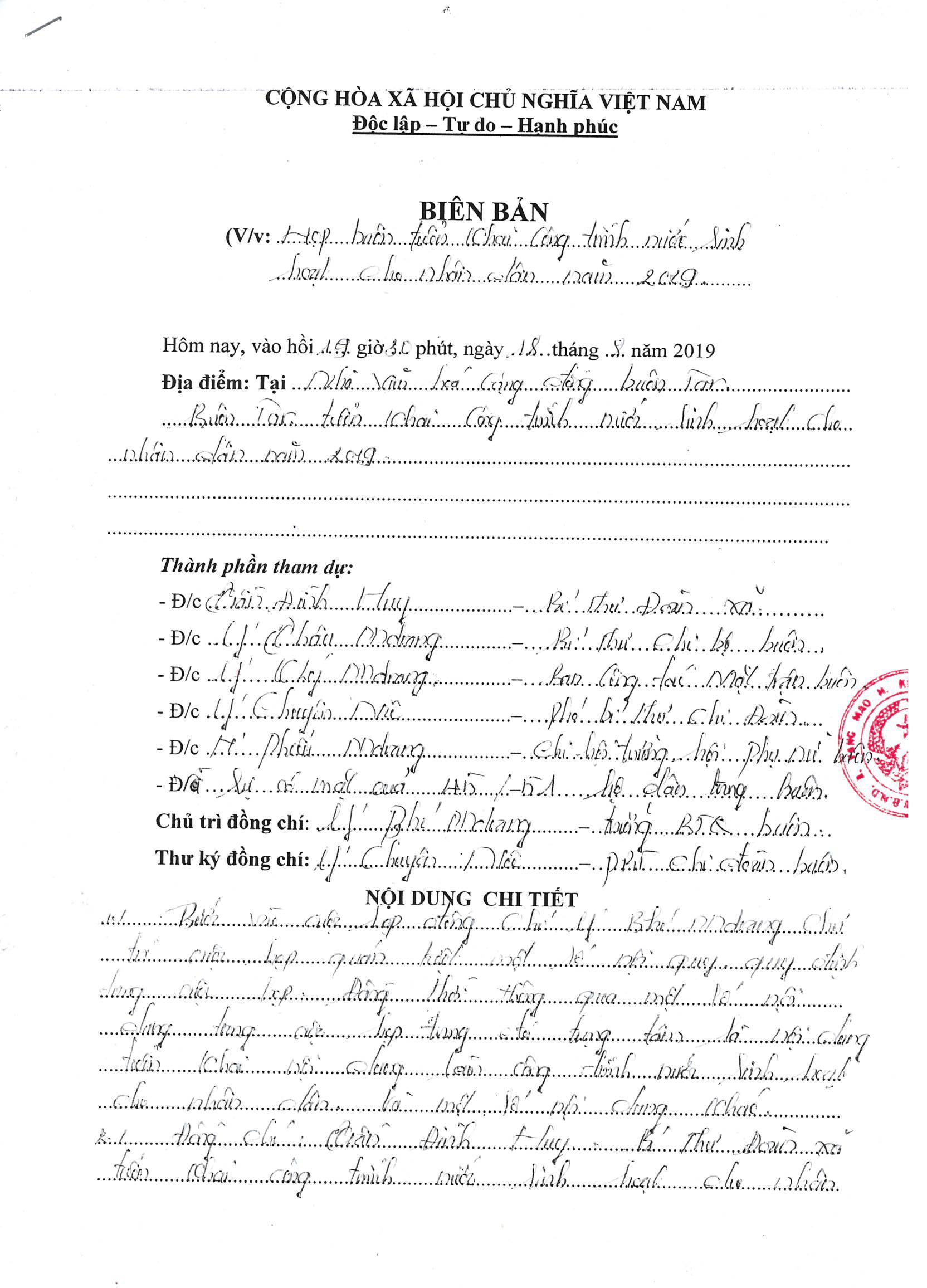
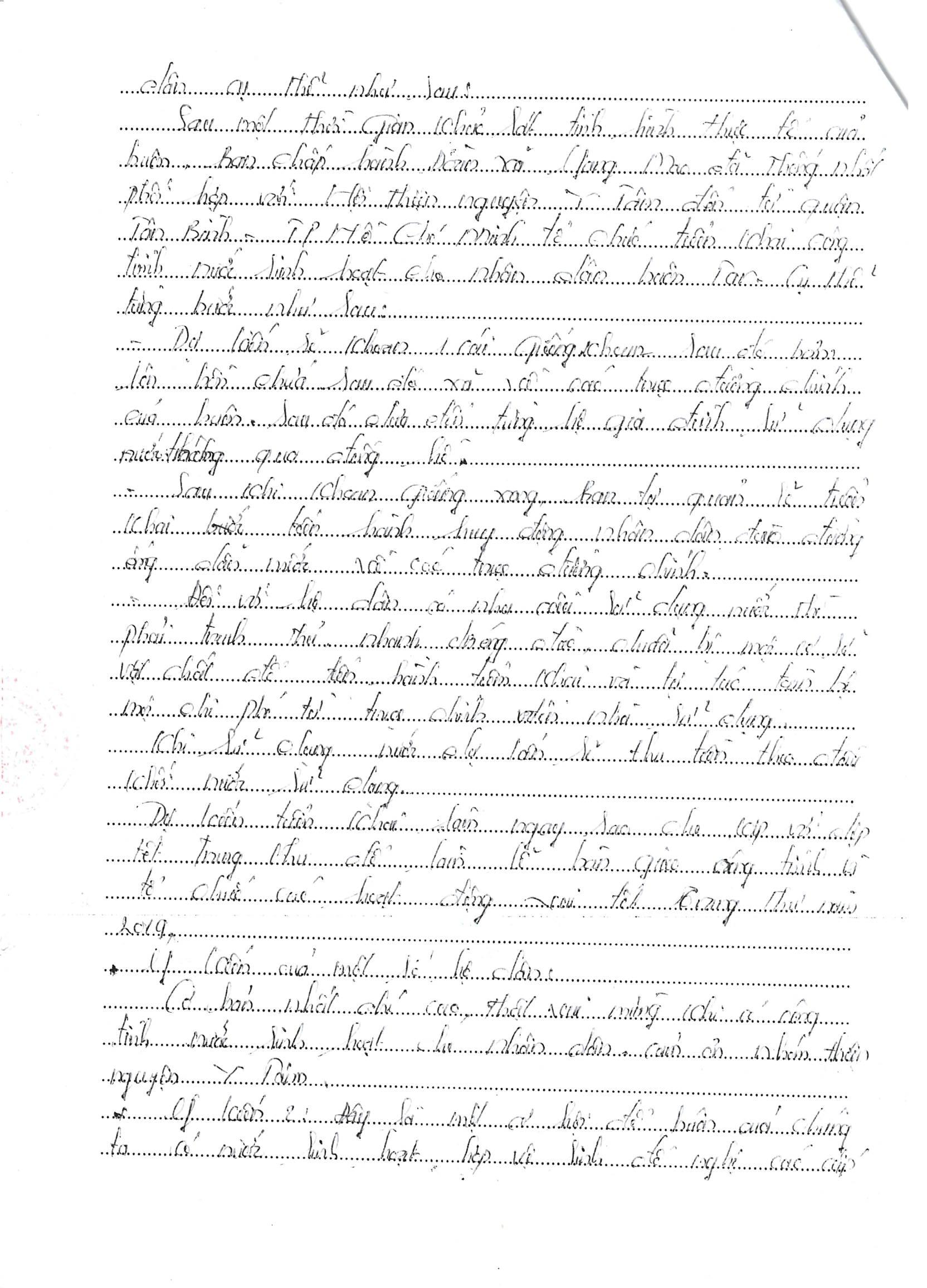
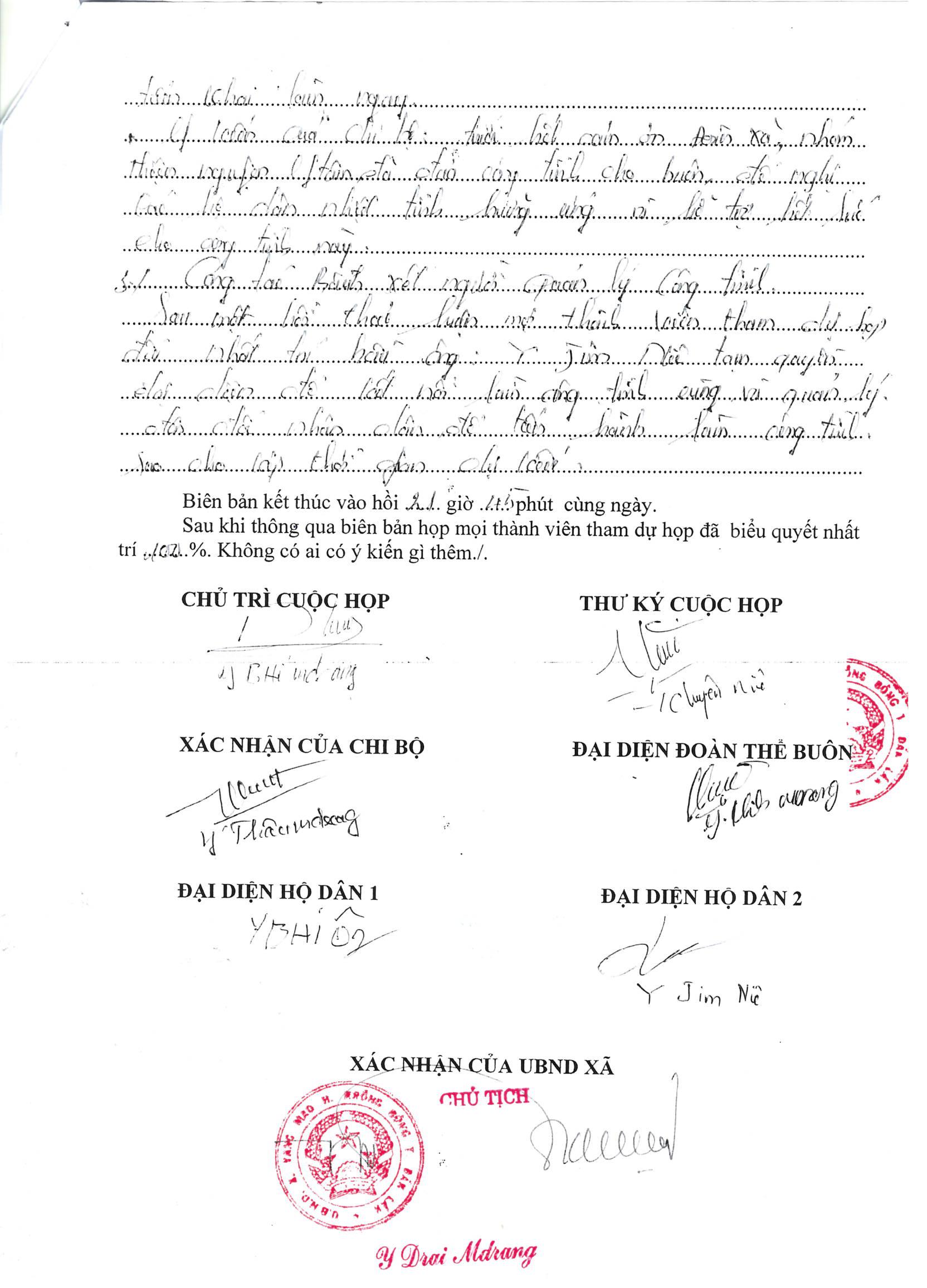
On the evening of 18/8/2019, the meeting took place with all the parties involved, and the outcome showed that 100% of households in Tar village agreed to take part in the project. What's more, the villagers are eagerly looking forward to having clean water soon. Y Tam was delighted by this news, because as long as the villagers are united and involved, carrying out the project will be so much easier.
Meeting minutes:
Y Tam agreed with the villagers on the following working arrangement: Y Tam will fund the well drilling, the machinery and the main pipeline, and provide technical support for the installation. The villagers will contribute their labor to dig the trenches and lay the water pipes. From the main pipeline, each household will install its own pipe to bring water all the way to their home.
Throughout implementation, Y Tam will closely monitor the technical side and the progress to ensure the quality of the work.
2/ PROJECT PHASES
This is a large community project, so it requires a lot of time, effort and funding. Moreover, although Y Tam invited the drilling contractor to survey the groundwater, it is still not certain that water will be found. This is a hard area to drill, with hard rock; drilling advances only 4 to 5 m a day, and the well has to go down a hundred meters or more.
To make the project easier to carry out, Y Tam has divided it into 2 phases:
1/ Phase 1 – Drilling the well: the drilling contractor will come to drill, and Y Tam has contracted the whole job out to them: if they find water, we pay the fee; if there is no water, there is no charge. Once this phase succeeds, we will move on to phase 2; if it does not, we will look for another solution.
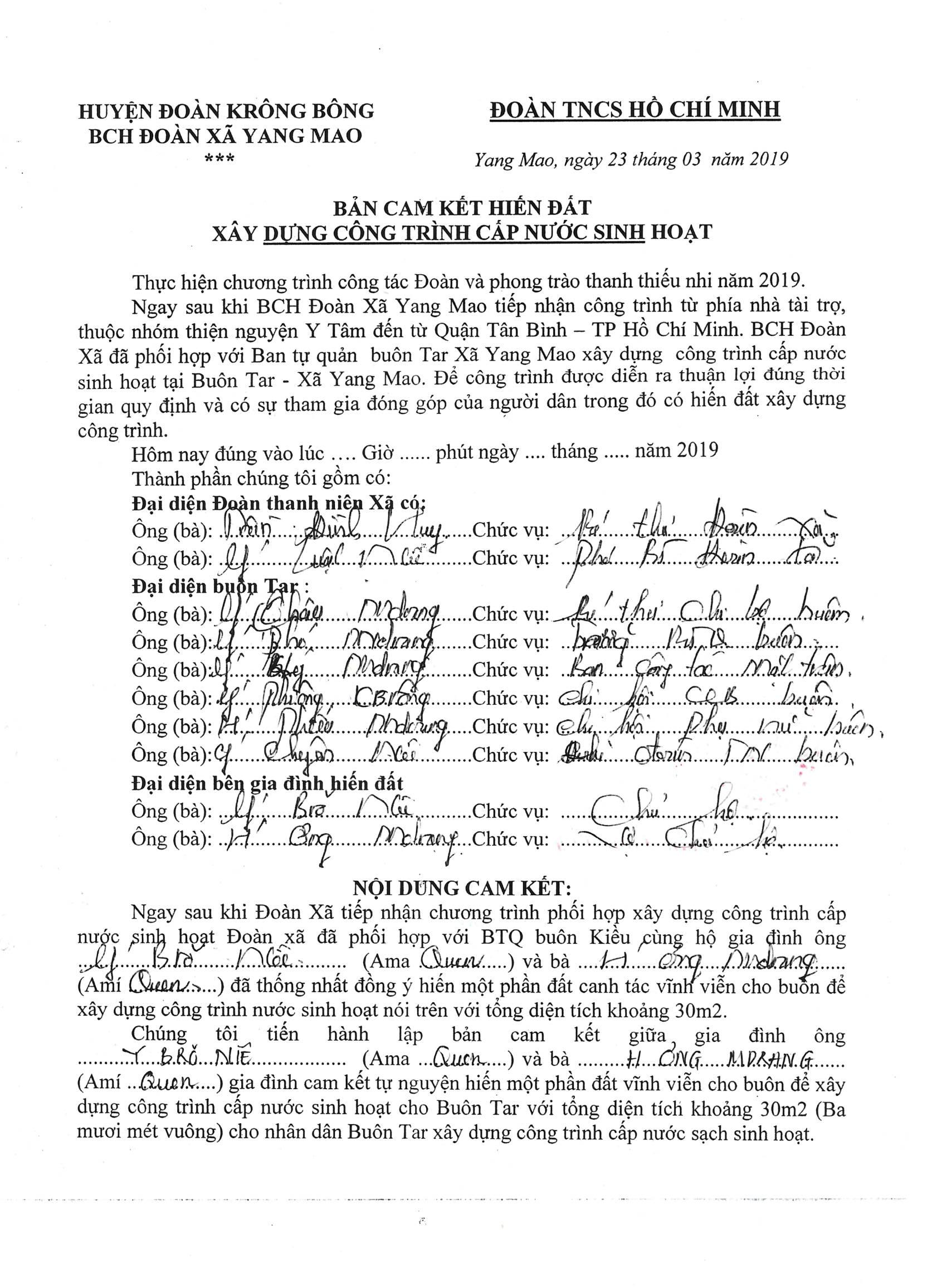
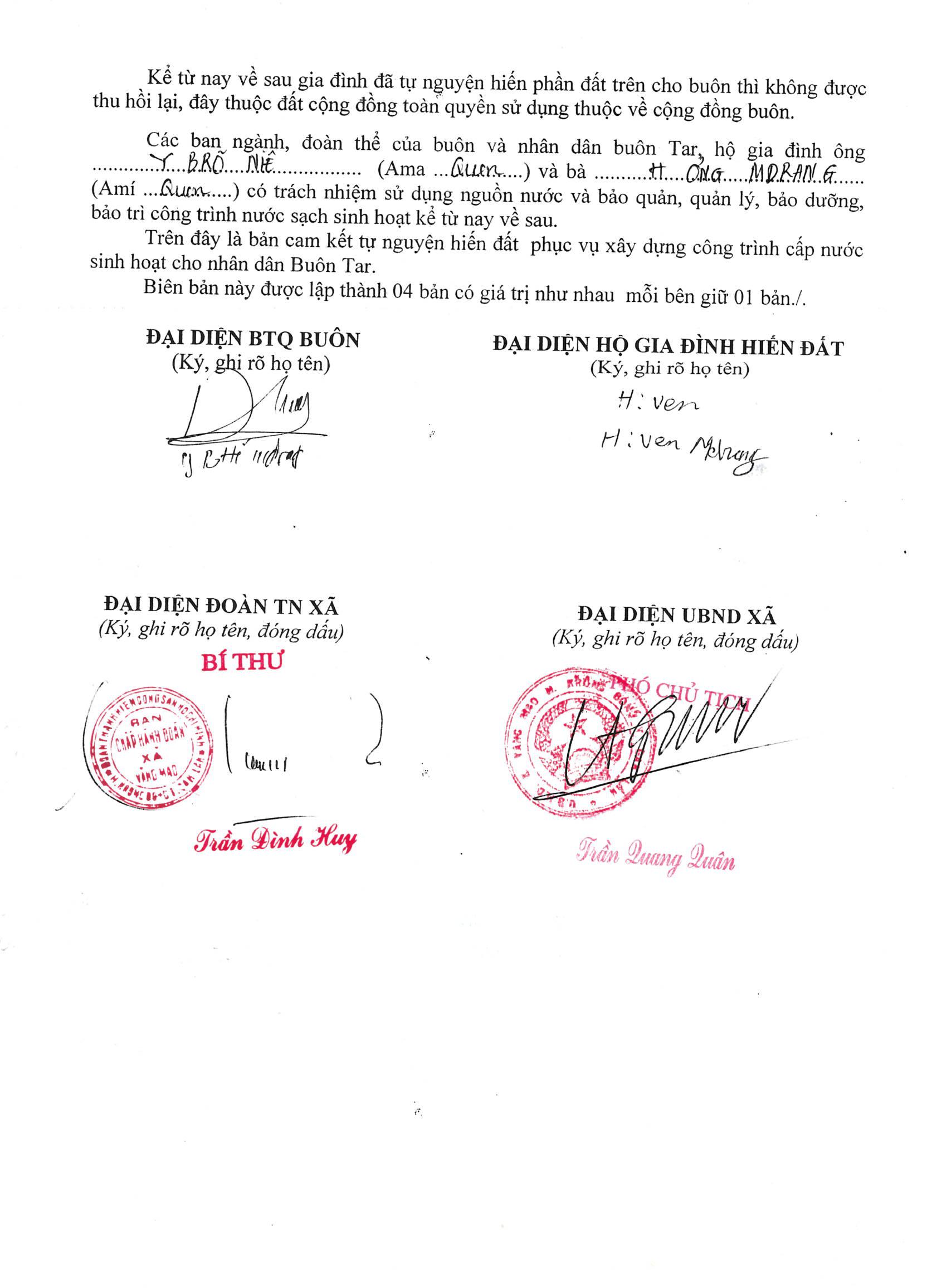
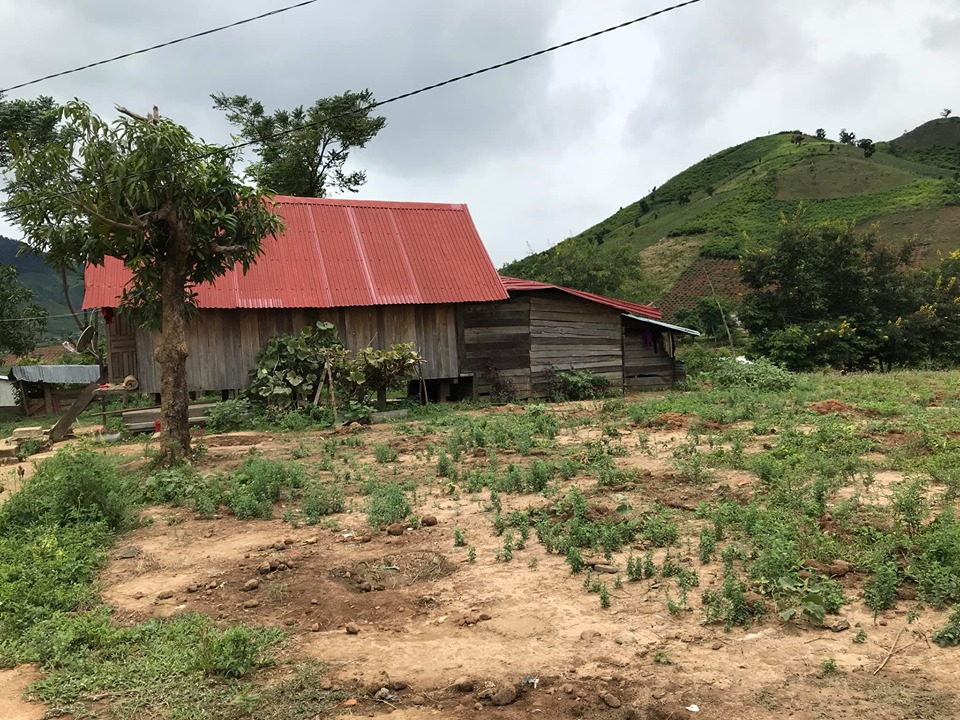
In this phase, Y Tam has already chosen the location for the well and obtained the permanent land donation papers from the household where the water supply station will be placed.
Land donation record:
And actual photos of the well site:
2/Phase 2 – Installation, test run and handover. In this phase, Y Tam will carry out the following work:
2.1/ Measure and install the water system: pump, storage tank, power pole, pipes, meters… to bring water to every household
2.2/ Show the villagers how to operate and use the water supply, and help them change their daily habits.
2.3/ Test run: the system will run on trial for one month to see how much water the villagers use, to propose a suitable fee that every household can afford, and to fix any problems that come up.
2.4/ Completion: hand over the project, sign commitments and give the villagers the right to run it themselves
3/ PROJECT SUSTAINABILITY
So that the project lasts and remains sustainable, and the villagers truly benefit from it, Y Tam will set up an operating committee of village members to maintain the clean water system, including a treasurer, a person who reads the meters every month and collects payments, and a supervisor.
The money collected each month will be divided into 3 parts
– Paying the electricity bill
– Paying the operators' wages
– Maintenance fund: this fund is used to maintain the machinery, the main pipeline…
The operating committee is responsible for managing, reporting on and supervising these expenses, being transparent with the villagers and sending reports to Y Tam for monitoring, to prevent losses, overcharging and personal gain.
III/ PROJECT BUDGET:
As Y Tam explained above, the project will be carried out in 2 phases. For phase 1, Y Tam has agreed with the contractor on a drilling cost of 35 million VND (drilling only, not including the pump and cables). If the well finds water, we pay the fee; if not, nothing is owed.
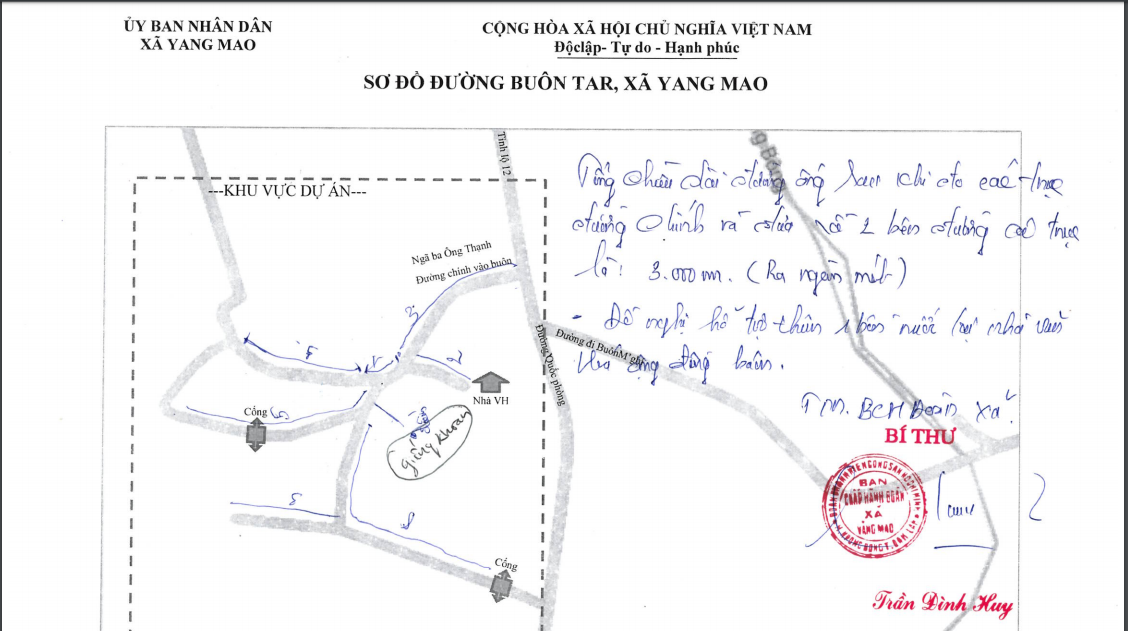
For phase 2, Y Tam will draw up a detailed budget once phase 1 succeeds, and will then publish an updated budget for installing the system. Y Tam has already measured the routes for the main pipeline: about 3000 m of pipe (see the map drawing)
IV/ SUPPORTING THE PROJECT:
Clean water is one of the most important factors affecting human health, not only for the villagers and children of Tar village but for every one of us. Access to clean water is the most basic human need, yet it has become the villagers' long wait and Y Tam's constant worry. Y Tam hopes the villagers will soon have clean water to use, so that their health is no longer threatened by polluted stream water.
That is why Y Tam very much hopes to receive the support of donors near and far.
ALL CONTRIBUTIONS TO THE CLEAN WATER FOR TAR VILLAGE PROJECT CAN BE SENT TO:
Y Tam Volunteer Organization
Office address: 958/65/24 Lạc Long Quân Street, Ward 8, Tân Bình District, Ho Chi Minh City.
Phone: 098 567 4772
Bank accounts:
1/ DongA Bank: Account number: 0101607577 – Account name: Đào Thị Minh Lệ, Branch: 343 Lê Văn Sỹ – District 3 – Ho Chi Minh City
2/ Vietcombank: Account number: 0721000640139 – Account name: Đào Thị Minh Lệ, Kỳ Đồng Branch, Lê Văn Sỹ Transaction Office, Tân Bình District.
3/ Vietinbank: Account number: 107001354465 – Account name: Đào Thị Minh Lệ, Branch where the card was opened: 207 Lê Văn Sỹ – District 3 – Ho Chi Minh City
4/ Agribank: Account number: 1606 205 971 141 – Account name: Đào Thị Minh Lệ, An Phú Branch.
Note: When transferring, please clearly state: Donor's name + Support for the clean water project
Sincerely
Y Tam Volunteer Organization
0 comments
No comments yet. Be the first to share.
Leave a comment
Comments appear after they are approved. Your email is never shown.